

Why Winter Cleaning Is Essential for NYC Commercial Buildings
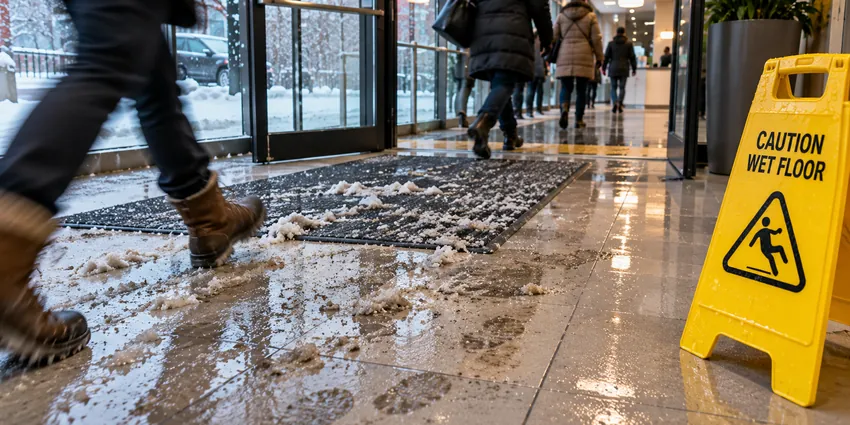
Winter cleaning for NYC commercial buildings is the set of extra tasks that keep salt, slush and moisture from damaging floors and creating slip hazards at your entrances. Every pair of boots carries snow, road salt and grit through your lobby, and a standard nightly clean cannot keep up with a storm day's traffic.
The result is white salt residue, wet floors and a weaker first impression, with the highest slip risk right where visitors enter. This guide covers a practical plan: stopping soil at the door with entrance mats, removing salt and slush correctly, adjusting schedules during storms, and knowing when to add professional help.
Common Winter Cleaning Challenges for NYC Commercial Properties
NYC winters stack several problems at once, and most of them start at the front door. Typical challenges include:
- Road salt residue: deicers tracked indoors dry into stubborn white film on floors
- Slush and melting snow: moisture pools in lobbies, elevators and reception areas
- Heavy foot traffic: offices, retail and mixed-use buildings take in soil continuously
- Indoor cleanliness: dried salt and grit break into fine dust that spreads through carpets and corridors
- Flooring damage: grit and salt dull finishes on hard floors and can harm stone; the Natural Stone Institute has studied how deicing chemicals affect stone under freeze-thaw and wet-dry cycling
- Safety: OSHA requires walking-working surfaces to be kept free of hazards such as spills, snow and ice (29 CFR 1910.22)
Outdoor rules add pressure. NYC makes owners responsible for sidewalks, with time limits set by when snow stops: within 4 hours in daytime (7 a.m. to 5 p.m.), within 14 hours in the evening window, and by 11 a.m. for overnight snow, with fines of up to $250. More salt outside means more salt tracked in, so your interior plan should expect it. For example, a Midtown lobby that is spotless at 8 a.m. can be wet and gritty by 9:30 on a slush day.
Takeaway: NYC commercial buildings prevent salt damage by stopping soil at the door with entrance mats, removing tracked-in residue quickly with a method matched to the flooring, and keeping floors dry.
How to Remove Salt and Slush from Commercial Floors During Winter
The best way to remove salt and slush from commercial floors is to pick up loose soil dry first, dissolve the residue with a cleaner matched to the floor, and dry the surface completely. Salt and slush removal from commercial floors works best in this order:
- Remove loose dirt and salt with a dust mop or vacuum before any wet cleaning.
- Apply a cleaner that dissolves salt residue and is approved for your flooring.
- Mop with clean water and microfiber equipment, changing the solution often.
- Dry the floor thoroughly and place wet-floor signs while it is damp.
- Increase frequency during storms and for several days after.
Method matters by surface. Sealed tile and vinyl tolerate more than natural stone, wood or carpet, so check the flooring manufacturer's care guide before choosing a product. Acidic cleaners can etch calcium-based stone, and over-wetting can harm wood. For example, in a busy office lobby, a porter who dry-mops and spot-dries every hour on a slush day helps prevent the film that nightly cleaning has to scrub off later.
For embedded residue, bring in professional commercial floor cleaning services with scrubbing equipment suited to your flooring. This is winter floor care for businesses at its most practical: pick up soil early, and the later cleaning is lighter. Good snow and salt floor protection starts with the first dry pass, not the last scrub.
Takeaway: assign one person per shift to own the entrance floor, with a written dry-and-check routine.
Commercial Entrance Mat Maintenance: Protecting NYC Buildings from Winter Mess
Entrance mats are the cheapest way to keep winter soil off your floors, but only if they are long enough and kept dry. Matting figures attributed to the American Institute of Architects and reported by CleanLink put capture at about 33% of walked-in soil at 5 feet, 52% at 10 feet, and up to 100% at 20 to 25 feet. A small 3-by-5-foot mat, which many facilities install, will not do the job.
| Factor | Scraper mat | Wiper (absorbent) mat |
|---|---|---|
| Placement | Outdoors or just outside the door | Immediately inside the door and extending inward |
| Job | Scrapes snow, grit and larger debris from footwear | Absorbs moisture and traps fine soil and salt |
| Maintenance | Shake out, hose or vacuum; clear snow buildup | Vacuum, extract or swap when saturated; dry fully |
| Watch for | Ice buildup, curled edges, shifting | Saturation, slick backing, worn or frayed edges |
Combine both types into an entrance mat system: a scraper outside, a wiper inside and, where space allows, an absorbent run extending further in. For example, a lobby might pair an exterior scraper mat, a scraper-wiper combination at the door and an absorbent run that continues toward the elevators. Choose commercial-grade mats built for heavy pedestrian traffic, and lay them flat with secure backing, since curled edges create trip hazards.
Inspect entrance mats every few hours during active snow or slush, vacuum or swap them at least daily, and replace saturated mats immediately; no standard sets a frequency, so write yours into the scope. Commercial entrance mat cleaning matters because a saturated mat stops capturing water and starts spreading it. Let mats dry fully before putting them back in service. Our storefront floor-care guide covers the same principles for shops.
Takeaway: measure your entrance path and compare it to the figures above before you buy or rent more matting.
5 Effective Winter Cleaning Strategies for Commercial Properties
A good winter plan changes frequency, focus, products, safety steps and deep-cleaning timing. These winter cleaning protocols fit most commercial properties:
- Increase frequency: add passes at entrances, lobbies, elevators and corridors.
- Prioritize high-traffic areas: entrances, reception desks, elevator lobbies and shared spaces come first.
- Use compatible products: match each cleaner to the flooring material.
- Run wet-weather safety steps: wet-floor signs, absorbent materials and fast spill cleanup.
- Schedule deep cleaning: extract carpets and restore floors to remove embedded salt, using commercial carpet cleaning and scrubbing as needed.
As an illustration, a storm-day routine might add hourly entrance checks and mat swaps, with weekly carpet vacuuming at edges and a periodic deep clean after the season's worst weeks. Train staff to spot moisture build-up and treat prevention as cheaper than repairing visible damage.
Takeaway: write a storm-day schedule now, before the first major snowfall, so nobody improvises.
Benefits of Professional Winter Cleaning Services for NYC Businesses
Professional commercial winter cleaning services NYC providers offer add equipment, flooring knowledge and schedule flexibility that most in-house teams lack. Benefits include:
- Commercial-grade equipment and floor-care products
- Teams familiar with different flooring materials
- Flexible scheduling during heavy snow
- Consistent mat maintenance and high-traffic area cleaning
- Lower risk of premature floor repair or replacement
- A better appearance for visitors and tenants
For example, a Manhattan office building could combine daily entryway maintenance, scheduled floor cleaning and a periodic deep clean into one winter program. No program eliminates slip risk, but a documented one shows you maintained the property. Salt and slush removal from commercial floors, mat service and deep cleaning can all sit in one scope. See our professional office building cleaning services in NYC and building cleaning and maintenance; both support winter maintenance for commercial properties and broader NYC commercial building cleaning needs.
Winter Cleaning for NYC Commercial Buildings FAQs
How do NYC commercial buildings prevent salt damage to floors during winter?
NYC commercial buildings prevent salt damage by stopping soil at the door with entrance mats, removing tracked-in residue quickly with a method matched to the flooring, and keeping floors dry.
How often should commercial entrance mats be cleaned during winter?
Inspect entrance mats every few hours during active snow or slush, vacuum or swap them at least daily, and replace saturated mats immediately; no standard sets a frequency, so write yours into the scope.
What is the best way to remove salt and slush from commercial floors?
The best way to remove salt and slush from commercial floors is to pick up loose soil dry first, dissolve the residue with a cleaner matched to the floor, and dry the surface completely.
Keep Your NYC Commercial Building Clean, Safe, and Protected This Winter
Proactive winter cleaning for NYC commercial buildings protects the floors you have already paid for. Stop soil at the door with commercial entrance mat maintenance, remove salt and slush before it dries, and adjust schedules to weather and foot traffic. Each step supports a safer, better-looking building.
Before the next major snowfall, review your winter plan, measure your entrance matting and request a winter cleaning assessment from a provider of commercial winter cleaning services NYC property managers can rely on. Learn more about ProCleanings.
About this guide. ProCleanings is a commercial cleaning contractor in Long Island City, NY, serving New York, New Jersey and Pennsylvania. Examples are illustrative scenarios, not client case studies. Confirm legal duties, including sidewalk rules, with qualified counsel.

Written by
Hazel Glory BorreDirector of Support, ProCleanings
Hazel leads operational support at ProCleanings — coordinating scheduling, client communication, and quality assurance so service delivery stays consistent and accountable.